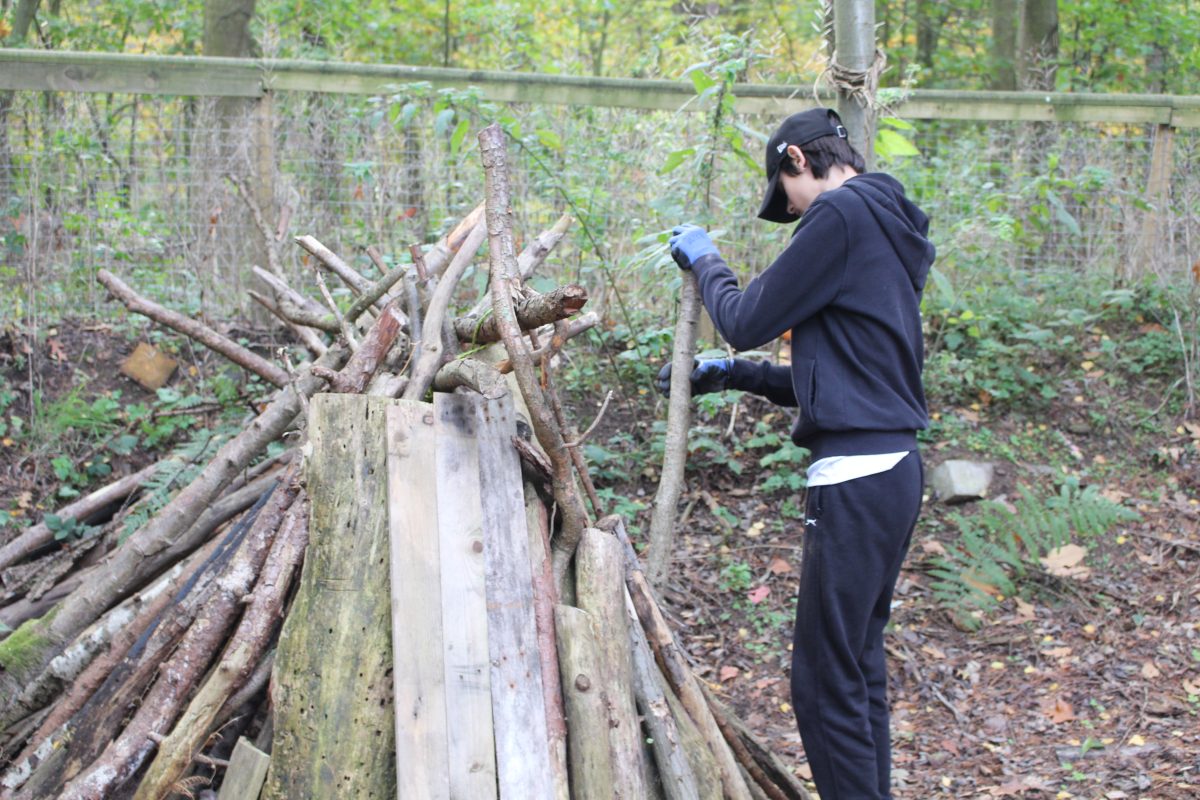
Forest School is an outdoor learning session of up to an hour and a half, where students focus on developing skills beyond academic subjects and beyond the classroom. It supports the real-world application of skills and helps students connect with one another and the natural world. Sessions take place on the Portland College campus, where the Forest School area includes den building spaces, a fire pit, tool work areas, hammock spaces and other woodland. A smaller fire pit sits outside the school building, and a Forest School classroom, creatively made from a converted storage container, gives students a place to learn on wetter days.
Research suggests that outdoor learning can have a positive impact on engagement, well-being, social development and academic outcomes. Natural environments tend to feel less restrictive and less demanding than traditional classrooms, which helps many learners feel calmer, more regulated and more ready to learn. For students with SEND and SEMH needs, practical, hands-on activities offer a more accessible way to take part, allowing them to learn by doing rather than relying only on verbal instruction or written work.
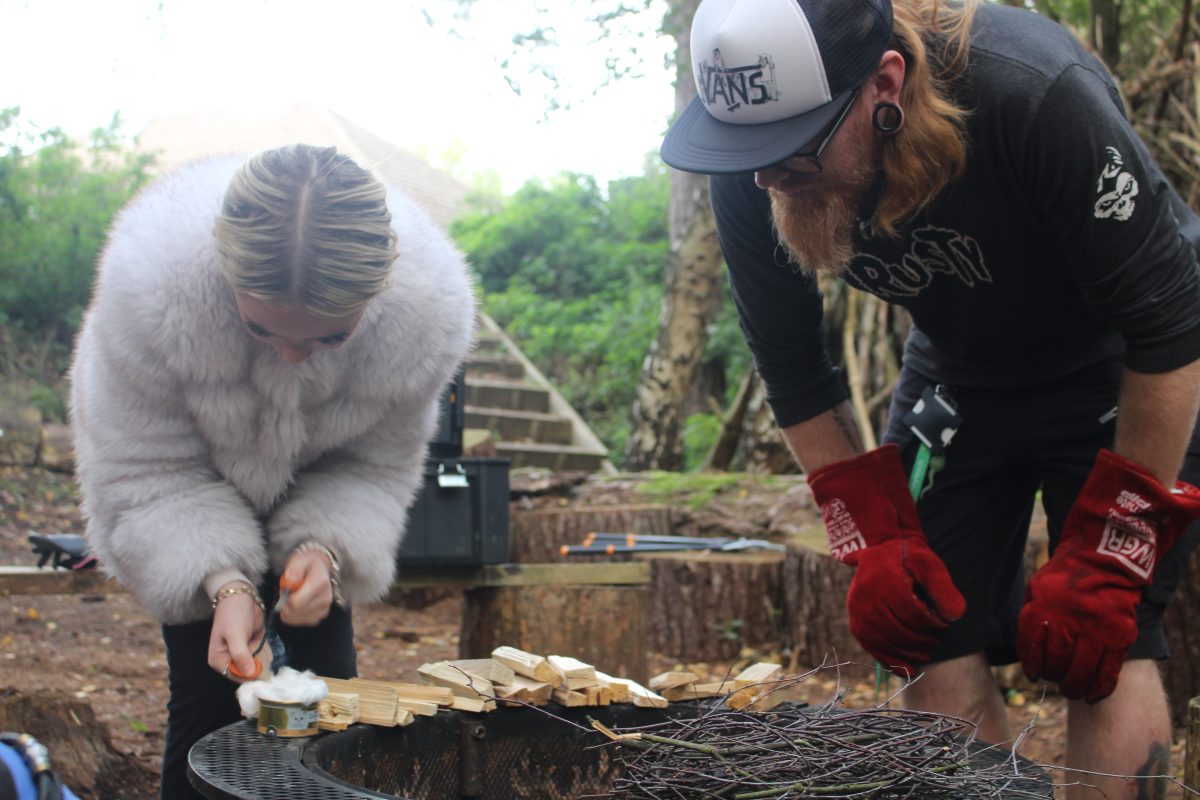
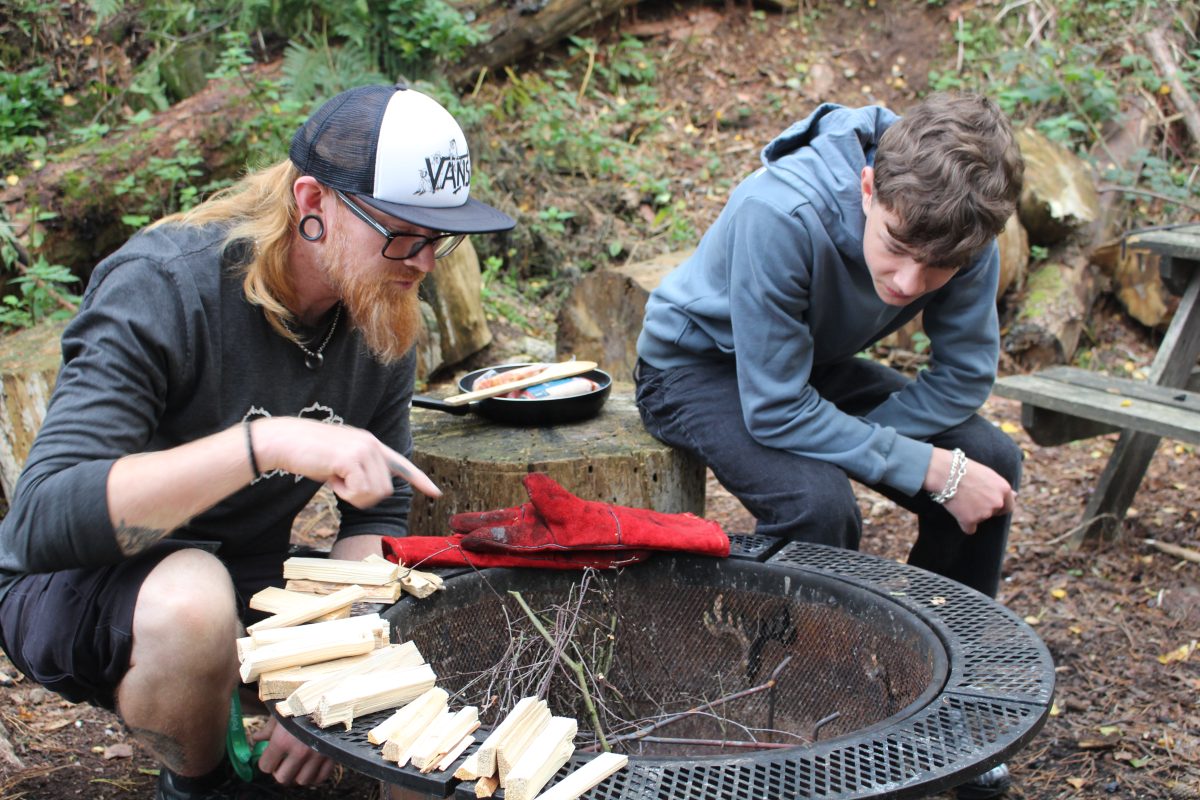
This term, students have been learning how to light and maintain fires safely, just in time for Bonfire Night. They have found out which materials catch fire most easily, assessed risk and reinforced key safety messages at one of the most prominent times of year for fire safety. They have also used a range of tools to cut, chop and saw wood, always with a focus on safe use and understanding how to reduce risk. Other sessions have seen students make mallets and tent pegs, build shelters from tarps, learn to tie ropes and knots, make bird feeders and bug hotels, and take woodland walks through the seasons to see how the forest changes, often using them as artistic inspiration.
Forest School also gives students opportunities for choice, autonomy, relationship-building and supported risk-taking, helping them develop a sense of safety, competence and belonging. Through carefully supervised activities, they learn to make decisions, assess situations, solve problems and manage uncertainty. These experiences support executive functioning skills such as planning and self-management, while collaborative tasks build communication, teamwork and positive peer relationships.
Spending time in nature can also relieve stress and anxiety, giving students space to understand their own emotions and make sense of the world around them.
Students know the Forest School area as a place for respect, fun, reflection, learning and regulation.